
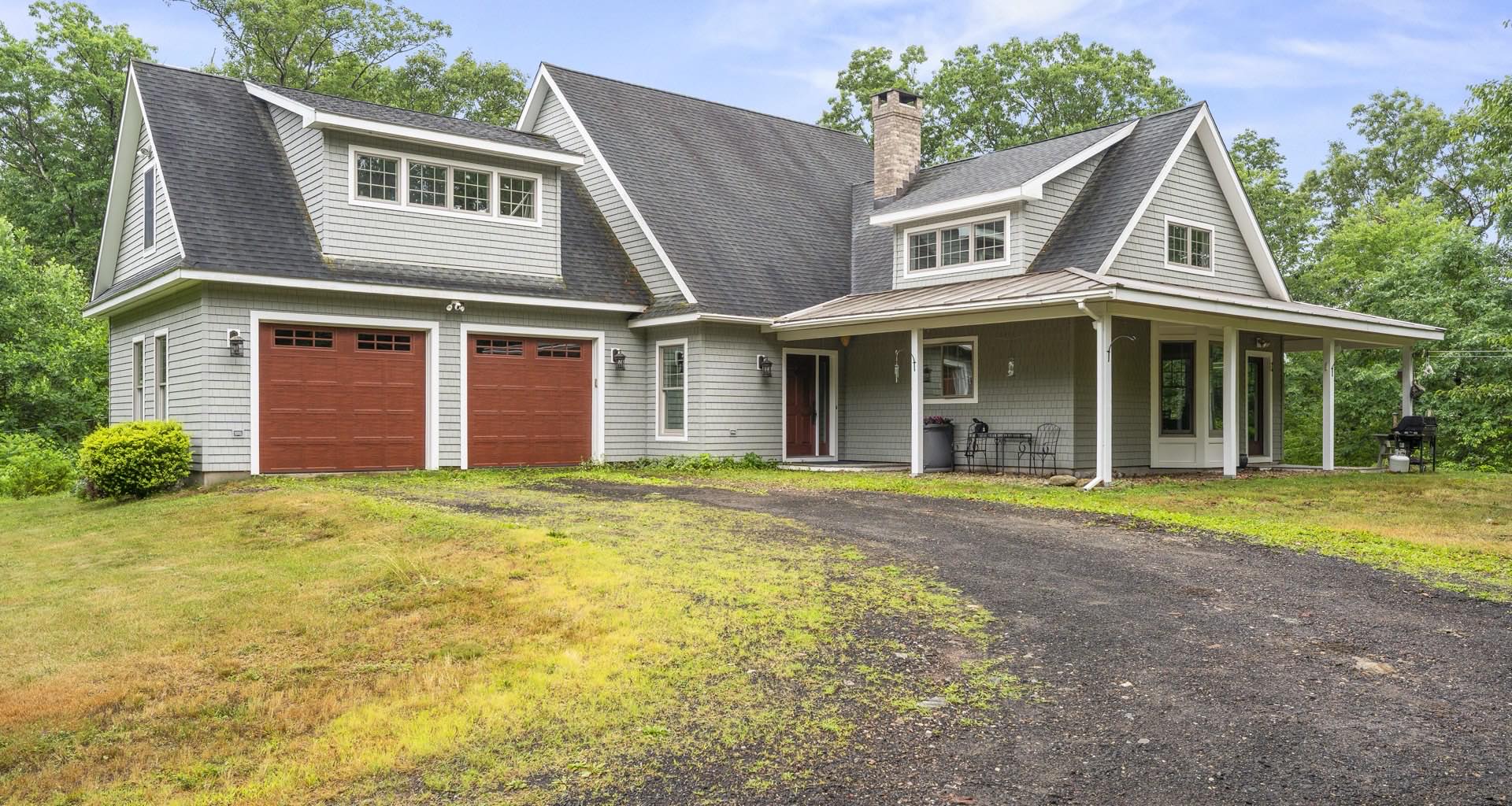
The 2027 Glastonbury Property Revaluation, Explained
A new assessment notice can look alarming after several years of rising prices. Here's what Glastonbury's revaluation actually changes — for your tax bill, and for the price your home would sell for today.
Start here
What a Town-Wide Revaluation Actually Is
Connecticut law requires every municipality to revalue all of its real property on a regular cycle so that assessments keep pace with the market. A revaluation is not a tax increase and it's not a reappraisal aimed at your house in particular — it's the town-wide reset that brings every property's assessed value back in line with market conditions as of a common assessment date. Between revaluations, your assessment sits still even as the market moves; on revaluation year, it catches up all at once. Glastonbury last revalued on the October 1, 2022 grand list; the next revaluation takes effect with the October 1, 2027 grand list, with the first tax bills reflecting the new values due July 1, 2028 — and the town has already begun preparing, putting its revaluation-services contract out to bid in spring 2026.
The reason it generates so much anxiety is timing. Glastonbury's typical home value has risen about 6.2% in just the past year (Zillow ZHVI, May 2026), and it has climbed steadily for several years before that. When a revaluation lands after that kind of run, a lot of owners open a notice showing a market value far above the one they remember from the last cycle. That jump is real — but what it means for your taxes, and what it means for your home's sale price, are two very different questions. Let's take them in order.
The mechanics
How Glastonbury Property Taxes Are Calculated
Connecticut towns don't tax your full market value — they tax your assessed value, which is set at 70% of market value, and they apply the town's mill rate to that. One mill equals one dollar of tax per $1,000 of assessed value. Glastonbury's mill rate is 33.73 (fiscal year 2026–27, set in June 2026 — the town adjusts this annually).
A worked example
Take a home with a market value of $560,000 — right around Glastonbury's typical value per Zillow (May 2026):
- Assessed value: $560,000 × 70% = $392,000
- Annual tax: $392,000 × 0.03373 ≈ $13,222 per year — roughly $1,100 a month folded into escrow
That's the whole formula: market value → 70% assessment → mill rate → tax bill. A revaluation changes the first number (your market value), which changes the second (your assessment). What it does to the third — and therefore your actual bill — is where most people's intuition goes wrong.
The counterintuitive part
A Higher Assessment Doesn't Automatically Mean a Higher Tax Bill
Here's the piece that calms most homeowners down once they see it: the mill rate is not fixed. Each year the town totals up the assessed value of every taxable property — the "grand list" — and sets the mill rate to raise the budget it needs. When a revaluation lifts assessments town-wide, the grand list grows, and the mill rate is recalculated downward against that larger base.
So your bill only rises meaningfully if your assessment went up by more than the town-wide average. Three outcomes are possible after a revaluation:
- Your value rose about the same as the town overall → your tax bill stays roughly flat (aside from any budget change).
- Your value rose faster than the average → you pick up a somewhat larger share of the levy, so your bill rises.
- Your value rose slower than the average → your share shrinks, and your bill can actually fall.
In other words, a revaluation is mostly a redistribution of the tax burden according to how neighborhoods and property types moved relative to one another — not a blanket increase. The eye-popping number on the notice is the market-value estimate; the number that hits your wallet is the bill after the new mill rate is applied. Don't judge one by the other.
The point that matters for sellers
Your Assessment Is Not Your Market Value
This is the sentence we repeat most often at listing appointments: the town's assessment is a tax figure, not a sale price. Even a freshly revalued assessment is a mass-appraisal estimate — the assessor is valuing thousands of properties from data and models, not walking through your renovated kitchen, standing in your private backyard, or seeing the new roof. Two things follow from that:
- Assessments lag the live market. A revaluation snapshots value as of a single assessment date, then freezes it until the next cycle — while real buyers keep bidding. In June 2026, Glastonbury homes sold at 107% of list price in an average of 18 days. Sale prices in a market like this routinely land above even a current assessment's implied value.
- Assessments can't see your specific home. Condition, updates, street, lot, and views move a real sale price far more than a model can capture. That's exactly the gap a comparable-sales valuation fills.
So if the revaluation notice made you wonder what your home would truly bring, don't reverse-engineer it from the assessment. Look at what comparable Glastonbury homes have actually sold for — get your free home value and we'll show you.
If your notice looks wrong
Reviewing and Appealing Your Assessment
After the new values are mailed, the town typically holds an informal review period with the revaluation company, followed by a formal appeal to the Board of Assessment Appeals. Glastonbury will publish the 2027 cycle's informal-review dates and Board of Assessment Appeals filing deadline as they are set. The bar for a successful appeal is straightforward: you're arguing that the assessor's estimate of your home's market value is too high — usually by pointing to recent comparable sales, an appraisal, or documented condition issues.
That's where a current, comparable-sales opinion of value is genuinely useful, whether you plan to appeal or simply want to understand where you stand. We're happy to pull recent solds for your street as a starting point — no cost, no obligation, and no requirement that you ever list.
- Read the market-value line, not just the assessment (which is 70% of it).
- Compare it to real sales of similar nearby homes from the assessment period.
- Mind the deadline — appeal windows are firm; confirm the current dates with the town.
Quick answers
Revaluation Questions, Answered
How does Glastonbury's 2027 property revaluation affect my sale price?
It usually doesn't. Revaluation resets your assessed value for property-tax purposes to reflect the market as of the town's assessment date — it does not decide what a buyer will pay. Your sale price is set by recent comparable sales, and in June 2026 Glastonbury homes sold at 107% of list price on average, frequently well above their assessed values.
How is a home valuation different from the town's assessment?
Your Glastonbury assessment is 70% of an estimated market value set at the town's last revaluation (October 2022) and is used only to calculate property taxes at the current 33.73 mill rate. Market value is what a buyer will pay today — in this market, often well above older assessments.
What are property taxes in Glastonbury CT?
Glastonbury's mill rate is 33.73 (fiscal year 2026–27), applied to 70% of your home's assessed market value. On a home assessed from a $560,000 market value, that's roughly $13,200 per year.

By Bryan Feery, REALTOR® — Updated July 2026 Feery Family Team · Berkshire Hathaway HomeServices New England Properties, Glastonbury CT
This guide is general information, not legal or tax advice. Mill rate, assessment ratio, revaluation dates, and appeal deadlines are as of the dates cited and can change; confirm the current figures and deadlines with the Glastonbury Assessor's office and consult your attorney or CPA about your specific situation.
- Town of Glastonbury — mill rate 33.73 (FY 2026–27, amended June 2026); assessment ratio 70% of market value.
- CT Office of Policy & Management — Revaluation Schedule — Glastonbury revaluations: 2027, 2031, 2037 (last: October 1, 2022 grand list).
- Zillow Home Value Index (ZHVI), Glastonbury CT — typical home value $560,612, +6.2% year over year (May 31, 2026).
- Berkshire Hathaway HomeServices market data / SmartMLS, Glastonbury CT — 107% sale-to-list, 18 days on market (June 2026).
Don't Read Your Value Off a Tax Notice
An assessment is a tax figure. A comparable-sales valuation is what your home would actually sell for. Get yours free from a local team — no obligation.
Related reading: what it costs to sell a house in Connecticut · living in Glastonbury: taxes, schools & market data · the latest quarterly market report.